

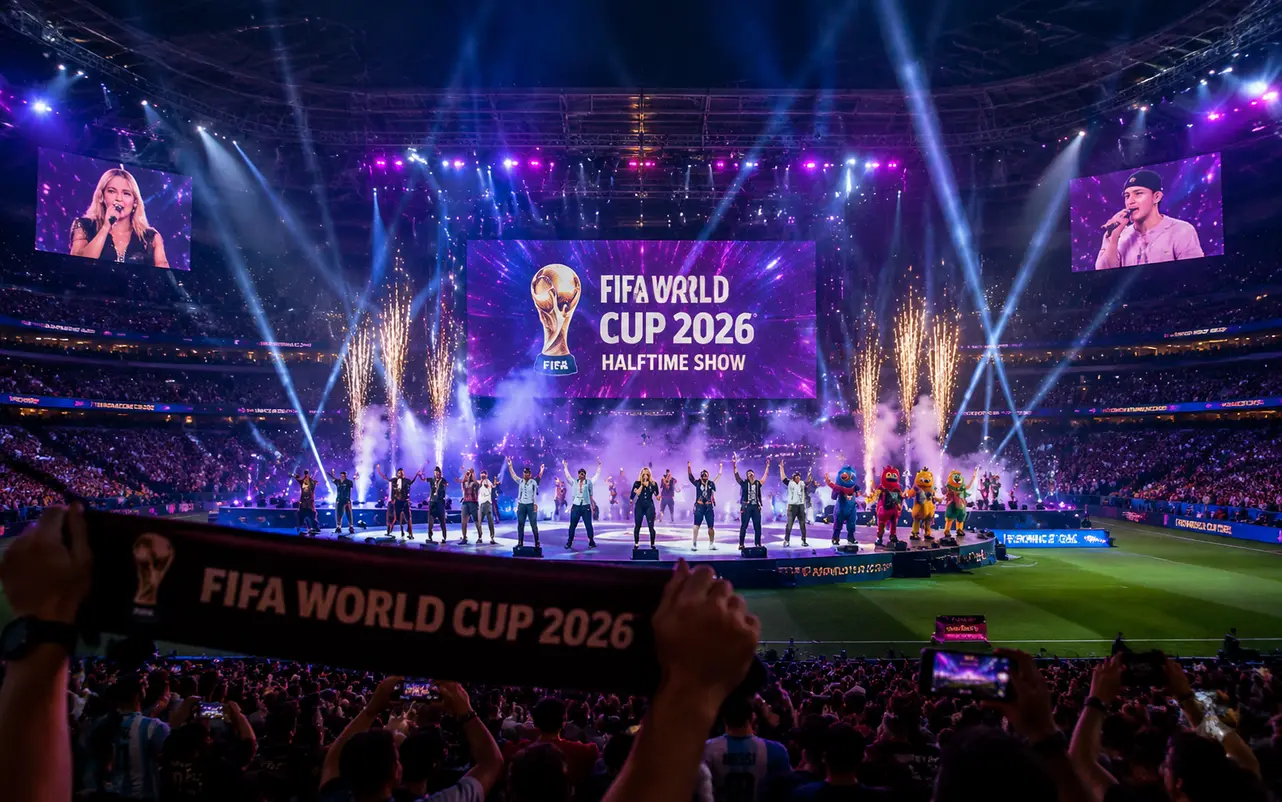
For the first time in World Cup history, the final had a halftime show. The match was played on July 19, 2026. It was held at New York New Jersey Stadium. Spain and Argentina were the two teams. The game was paused for 11 minutes. The halftime show featured Madonna, BTS, and Justin Bieber. Shakira took the stage too. Burna Boy entertained the crowd. The Muppets made an appearance as well.
It was a moment that divided the football world. Some called it a landmark celebration of sport and culture. Others called it an embarrassment. Either way, this was a significant departure from football tradition. This article explores why FIFA introduced the show, how it worked, and what it could mean for the future of the sport’s biggest match.
Why Is FIFA Introducing A Halftime Show Now
Is This Inspired By The Super Bowl Model
The influence of the Super Bowl is hard to ignore. The NFL’s halftime show is reliably the most-watched single broadcast in the United States. With the 2026 World Cup final taking place in New Jersey, FIFA appeared to take a cue from the American sports spectacle. The traditional 15-minute break was extended to mirror the Super Bowl’s status as the ultimate entertainment megashow. The Times went as far as declaring, “The Americanisation of the World Cup is now complete”.
What Does FIFA Gain From This Change
The business case is clear. An extended halftime creates additional advertising inventory, drives broadcast engagement, and opens new sponsorship opportunities. FIFA has already sold naming rights for the show to Topps. The show also supports FIFA’s Global Citizen Education Fund, which aims to raise US$100 million to help children access education and football. FIFA president Gianni Infantino called the performance “definitely the biggest stage ever”. A halftime show also increases the tournament’s appeal to non-traditional viewers, especially in the American market.
How Would A Halftime Show Actually Work In Football
Can Football’s Short Halftime Accommodate A Show
A standard football halftime is 15 minutes. That is not enough time for a major stage production. FIFA had to extend the interval. Reports suggested the break could last up to 30 minutes. The actual break during the final lasted 27 minutes and 19 seconds. The show itself ran for 11 minutes and 43 seconds. The remaining time was used to assemble and dismantle the stage on the playing surface.
Would FIFA Need To Extend The Interval
Yes. FIFA had to bend the rules. Under International Football Association Board laws, the halftime break should be no longer than 15 minutes. FIFA has bent these rules before. They did it at the 2024 Copa America final. They also did it at the 2025 Club World Cup final. Critics raised concerns about player safety. They worried about physical condition too. But FIFA proceeded anyway. They prioritized entertainment over tradition.
How Are Football Fans Reacting To The Idea
Why Do Traditionalists Oppose The Change
The backlash was immediate and fierce. Former A-League player Stefan Mauk called it “disgraceful again by FIFA” and warned it would “increase the likelihood of injuries/poor performance in second half”. Football journalist Seb Stafford-Bloor wrote that it was “yet another instance of the football coming second”. The Telegraph’s Jason Burt argued that “the headliners are, and always should be, out on the pitch wearing shirts, shorts, socks and football boots”. One fan wrote: “This is just embarrassing & so out of place at a football match”.
Why Do Some Fans Welcome A Bigger Show
Not everyone hated it. Some fans argued the World Cup halftime show was better than any Super Bowl halftime show they had ever seen. The stadium was packed during the performance, with fans voting with their feet. The show featured BTS, Shakira, and the Muppets. For casual viewers and families, the spectacle added to the event atmosphere. But the reaction online remained deeply divided.
What Could This Mean For The Match Itself
Could Players Benefit From More Recovery Time
A longer break could theoretically help players recover. But the extended interval also disrupts the natural rhythm of the match. Players are used to a 15-minute break. A 27-minute pause is a significant change. The first half of the final ended goalless. After Spain’s semifinal victory over France, they completed their dream run by beating Argentina 2-0 in the final. Whether the extended break affected the quality of play is debatable. But the concern about cooling down and injury risk is real.
Could It Disrupt Match Momentum And Rhythm
The biggest concern is the loss of momentum. Football is a game of rhythm. A long break can cool down players and disrupt tactical flow. England coach Thomas Tuchel, who criticized the tournament’s hydration breaks for “interrupting and changing the identity of a football match”, would likely have similar concerns about an extended halftime. The final’s second half saw Spain take control, but it is impossible to say whether the break helped or hindered either team.
Could This Change Spread Beyond The World Cup Final
Would Other Tournaments Follow FIFA’s Lead
If FIFA’s experiment proves successful, other governing bodies may consider similar additions. The Champions League final could follow this trend. Continental competitions might do the same. Major league showcases could also adopt it. The 2025 Club World Cup final already had a 25-minute halftime break. The precedent has been set. The tournament’s knockout stage had already delivered several memorable matches throughout the 2026 World Cup knockout stage. Other tournaments may see it as a way to increase broadcast value. It could also help attract new audiences.
Is This Part Of A Larger Shift In Football Presentation
This change is part of a broader trend. FIFA has already introduced hydration breaks. These effectively split matches into quarters. The tournament also featured an elaborate closing ceremony. Post Malone performed at the ceremony. Jennifer Hudson was also there. Robbie Williams took the stage too. Tom Cruise even made an appearance. Football is increasingly being packaged as an entertainment product, not just a sport. The halftime show is the latest step in that direction.
Conclusion
The first-ever World Cup final halftime show was a landmark moment. It brought together global music icons. The Muppets were part of it too. Even Ted Lasso made an appearance. The show generated massive global attention. It opened new commercial opportunities. But it also sparked a fierce backlash. Traditionalists believe the match itself should be the only spectacle. The show lasted just 11 minutes. But it may have changed football forever.
FIFA has shown it is willing to bend rules. It challenges tradition to grow the sport’s commercial appeal. Whether this is a positive evolution or a dangerous precedent depends on who you ask. One thing is certain. The 2026 World Cup final will be remembered. It will also be remembered for the moment football tried to become something more.
Love in-depth football and sports analysis? Follow Sports Arena for the latest football, cricket, and global sports stories, expert insights, match breakdowns, and exclusive updates delivered every day.
