

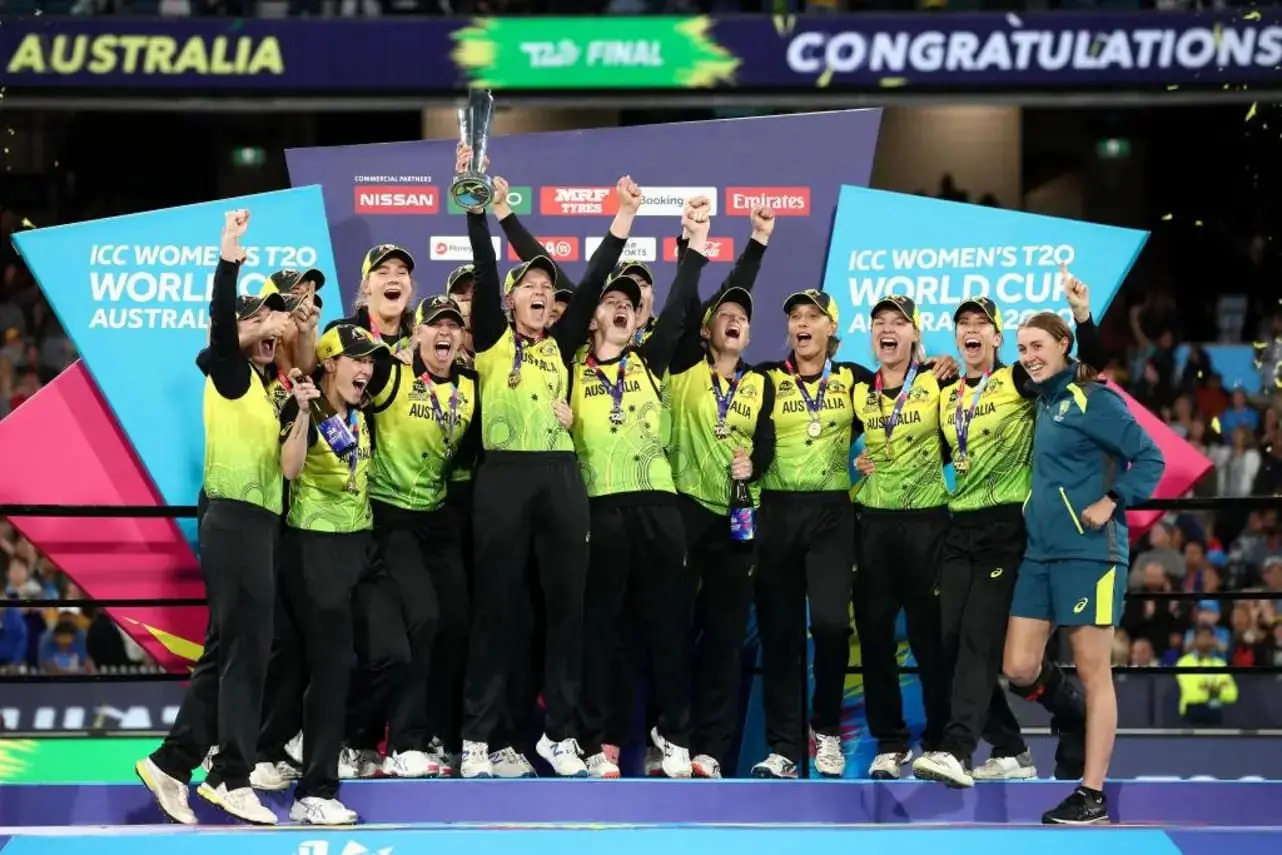
Australia are the champions of women’s T20 cricket again. They beat England in the final at Lord’s on July 5, 2026. It was their seventh T20 World Cup title. They won by seven wickets with 17 balls to spare. Beth Mooney was the hero.
She scored 64 runs and was named Player of the Tournament. Sophie Molineux led the team in her first tournament as captain. This win proved Australia are still the best in the world. They went through the entire tournament undefeated. Here is how they did it.
Australia’s Title Run In Context Of Women’s T20 World Cup 2026
Australia came into the tournament with something to prove. They had not won a World Cup in any format since 2018. The team was in transition. Meg Lanning and Alyssa Healy had moved on. Sophie Molineux was the new captain.
There were doubts about whether she was the right choice. But Australia answered every question. They won all seven of their matches. They were never seriously challenged. They played with a new aggressive brand of cricket. This was their most dominant T20 World Cup campaign ever.
What Made Their Tournament Start So Strong
Australia started the tournament with a statement. They scored 219 for 6 against the Netherlands, equalling the highest total in Women’s T20 World Cup history. Beth Mooney top-scored with 74. Ashleigh Gardner and Georgia Wareham also contributed.
This set the tone for the rest of the tournament. The batting was aggressive. The bowling was disciplined. The fielding was sharp. Australia were the complete package from the very first match.
How Australia Team Carried Momentum Into The Knockouts
Australia kept winning in the group stage. Their biggest test came against India at Lord’s. India batted first and scored 170 for 4. Australia chased it down with six wickets to spare. Ellyse Perry scored 56 and Ashleigh Gardner made 53.
This win knocked India out of the tournament. In the semi-final, Australia crushed the West Indies. They chased down 126 in just 13 overs. Beth Mooney scored 61 not out. Australia were peaking at exactly the right time.
Beth Mooney Tournament Stats And Impact
Beth Mooney was the best player in the tournament. She finished with 238 runs in seven matches. She averaged 47.60. Her strike rate was 142.5. She hit three half-centuries. She was named Player of the Tournament for the second time in her career.
Why Her Runs Mattered So Much
Mooney is a big-game player. She performs when it matters most. She scored 61 not out in the semi-final against West Indies. She followed that with 64 in the final. This was her third half-century in a T20 World Cup final. Her runs gave Australia stability at the top of the order. She anchored the chase and allowed others to play freely around her.
Her Role In The Final Push
The final was Mooney’s stage. Australia needed 151 to win. She scored 64 off 49 balls with 10 boundaries. She put on a 100-run partnership with Phoebe Litchfield. This partnership took the game away from England. Mooney was out 11 runs from the target. But the damage was already done. Australia won with 17 balls to spare.
| Matches | Runs | Average | Strike Rate | 50s | Highest Score |
| 7 | 238 | 47.60 | 142.5 | 3 | 74 |
Sophie Molineux Captain And Leadership Story
Sophie Molineux was a surprising choice for captain. She had only been captain for a short time. She had injury problems. She missed matches earlier in the year due to a back issue. There were doubts about whether she should lead the team. She silenced all of them.
Why Her Leadership Mattered
Molineux led from the front. She finished as the joint-second highest wicket-taker in the tournament with 11 wickets. She made smart bowling changes. She kept the team calm under pressure. She created a culture of trust and freedom. Her players responded to her style. Beth Mooney said the team has evolved and grown in the last six months.
How The Team Responded To Her Style
The team bought into Molineux’s leadership. They played with freedom and bravery. They were flexible and open to new ideas. They supported each other through injuries and tough moments. Molineux praised the group for their incredible support. She said the team is in a beautiful spot where everyone wants to play for each other.
Australia Vs England Women Final
The final was a sell-out at Lord’s. A sun-baked crowd of 28,887 watched the match. Australia won the toss and chose to bowl first. England were restricted to 150 for 4. Australia chased it down with ease.
The Key Moments That Shaped The Final
Australia struck early in the powerplay. They dismissed openers Amy Jones and Danni Wyatt-Hodge cheaply. England were 32 for 2. Alice Capsey was bowled in the 10th over at 67 for 3. England were struggling to build momentum. Nat Sciver-Brunt scored 58 not out, but her strike rate was slow. Freya Kemp added 44 not out at the end, but it was too little, too late.
How Australia Outsmarted England
Australia’s bowling was suffocating. They did not give England easy runs. Boundaries were hard to find. Lucy Hamilton took 1 for 19. Kim Garth bowled a tight spell. Australia’s fielding was sharp. They saved runs and created pressure. In the chase, Mooney and Litchfield played with aggression. They never let the required rate get out of hand. Australia were always in control.
Why Australia Stayed Ahead Of The Field
Australia were the best team in the tournament because of their depth and balance. They had match-winners in every position. They had experience and youth. They had a clear game plan and executed it perfectly.
Batting Depth And Flexibility
Australia’s batting lineup was deep and flexible. Mooney and Litchfield provided strong starts. Perry and Gardner anchored the middle order. Grace Harris and Georgia Wareham provided late hitting. Australia scored 219 against the Netherlands. They chased 171 against India. They chased 151 in the final. The runs came from multiple players, not just one star.
Bowling Variety And Control
Australia’s bowling attack was varied and controlled. Molineux led the wicket-taking with 11 scalps. She had spin and pace options. Megan Schutt provided experience. Kim Garth was economical. Alana King and Georgia Wareham offered wrist spin. Australia could defend totals and chase them down. They were never flustered.
Strengths Weaknesses Opportunities Threats
Strengths And Weaknesses
- Strengths: Australia were mentally tough and tactically sharp. They had strong batting and bowling depth. They did not lose a single match.
- Weaknesses: Australia had few weaknesses. They relied heavily on Mooney in the knockout stages. If she had failed, the chase could have been tighter. But she did not fail. The team also had injury concerns before the tournament. But they managed them well.
Opportunities And Threats
- Opportunities: This title creates a platform for future success. Australia have a young and talented squad. Lucy Hamilton is a rising star. The team can continue to dominate for years.
- Threats: Other teams are getting better. England pushed them in the final. India beat them in the group stage in 2024. The gap is closing. Australia need to keep evolving. They cannot rest on their past success.
Conclusion
Australia won the Women’s T20 World Cup because they were the best team. They combined quality, clarity, and composure at the right time. Beth Mooney was the tournament’s best player. Sophie Molineux silenced her doubters. The team played with freedom and aggression. They went undefeated. They won their seventh title. This was a statement victory. Australia are back on top of women’s T20 cricket. And they are not planning to leave anytime soon.
Want more expert cricket insights like this? Follow SportsAreana today to get the latest match analysis, breaking news, and tournament updates delivered straight to you daily. Stay ahead of the game!
